
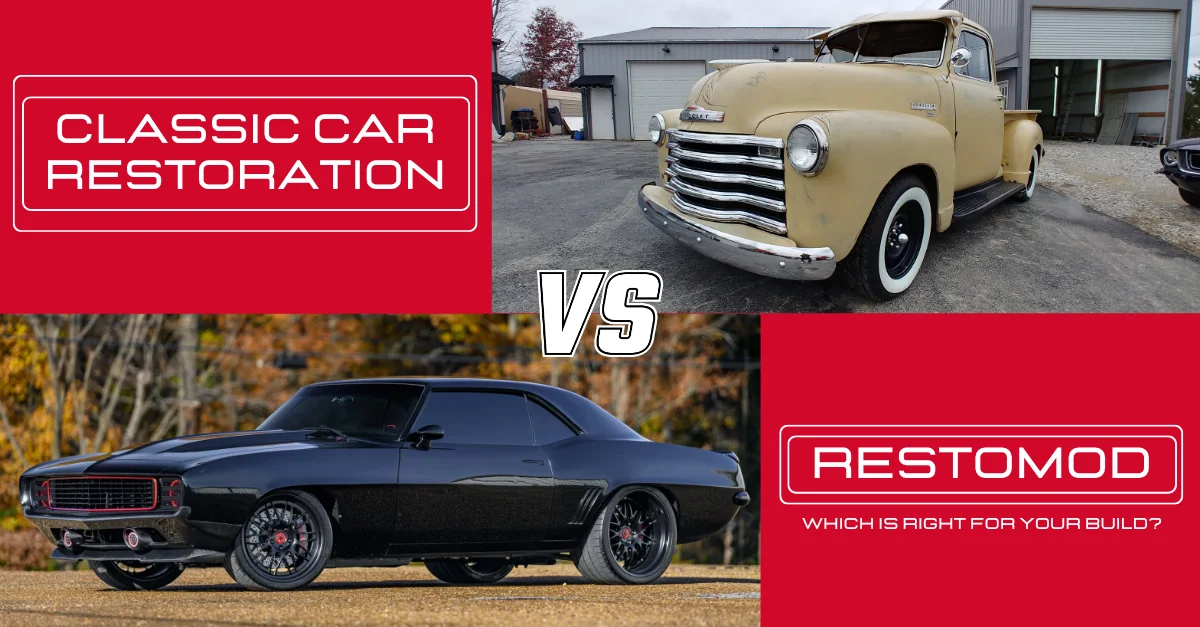
Owning a classic car is about more than getting from one place to another. It is about preserving history, building something personal, and enjoying a driving experience that modern vehicles cannot replicate.
Once you decide to rebuild a classic, however, there is an important question to answer: Do you want a traditional restoration or a restomod?
Both approaches can produce an incredible finished vehicle, but they serve different goals. Understanding the difference will help you make decisions about your car’s appearance, performance, comfort, and long-term value before the work begins.
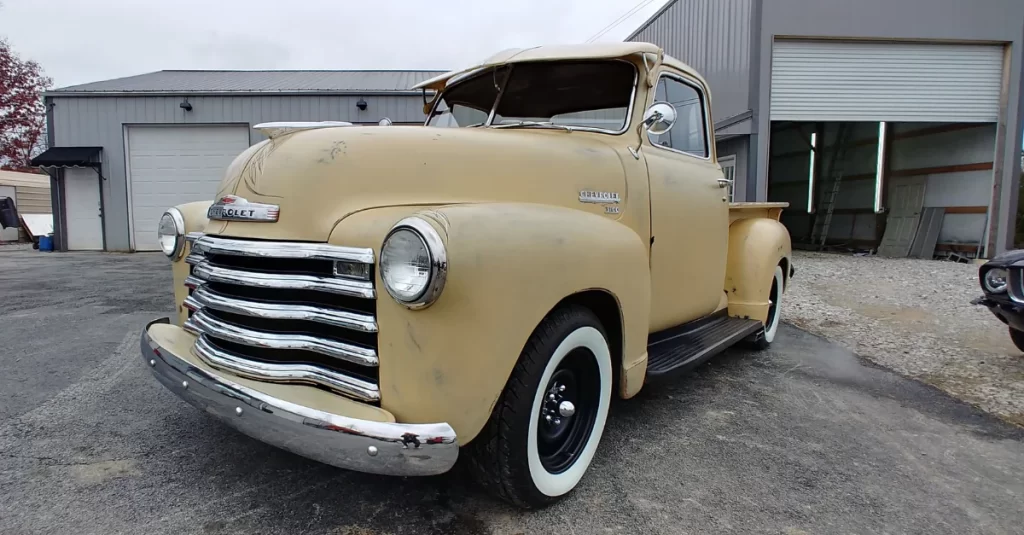
What Is a Classic Car Restoration?
A traditional restoration focuses on returning a vehicle as closely as possible to its original condition. The goal is to preserve the car’s factory appearance, components, and overall character.
Depending on the vehicle and its condition, a restoration may include:
- Repairing or replacing rusted body panels
- Rebuilding the original engine and transmission
- Restoring the factory suspension and braking systems
- Matching the original paint color
- Refurbishing the interior with period-correct materials
- Locating original, new old stock, or reproduction parts
- Preserving factory trim, badges, hardware, and other details
For rare, historically significant, or numbers-matching vehicles, originality may be especially important. A carefully planned restoration can preserve the characteristics that made the car desirable in the first place.
That does not mean every component must remain untouched. Safety, availability, and the condition of the existing parts still need to be considered. The key is making choices that remain faithful to the vehicle’s original design.
What Is a Restomod?
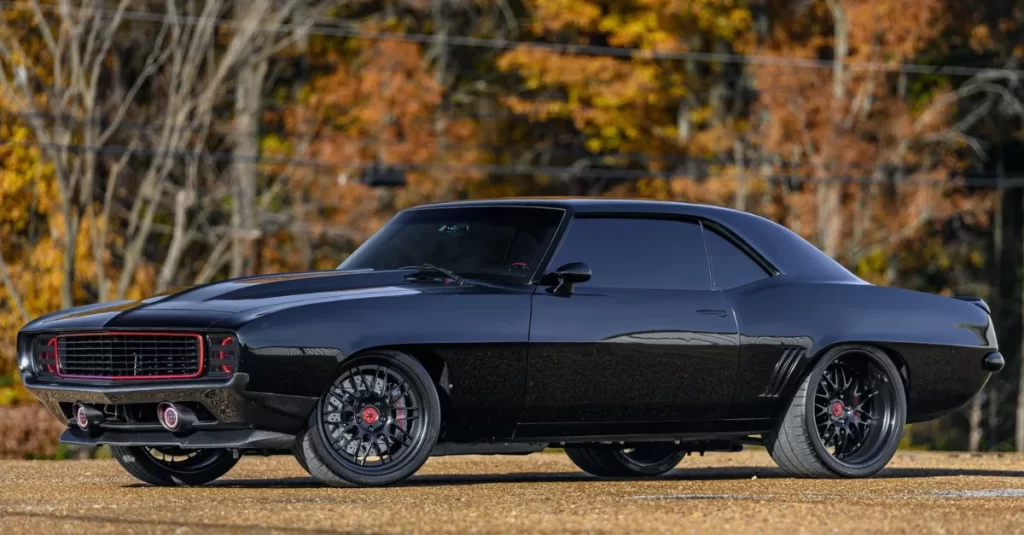
A restomod combines the appearance and character of a classic car with modern performance, comfort, and reliability. The name itself comes from combining “restoration” and “modification.”
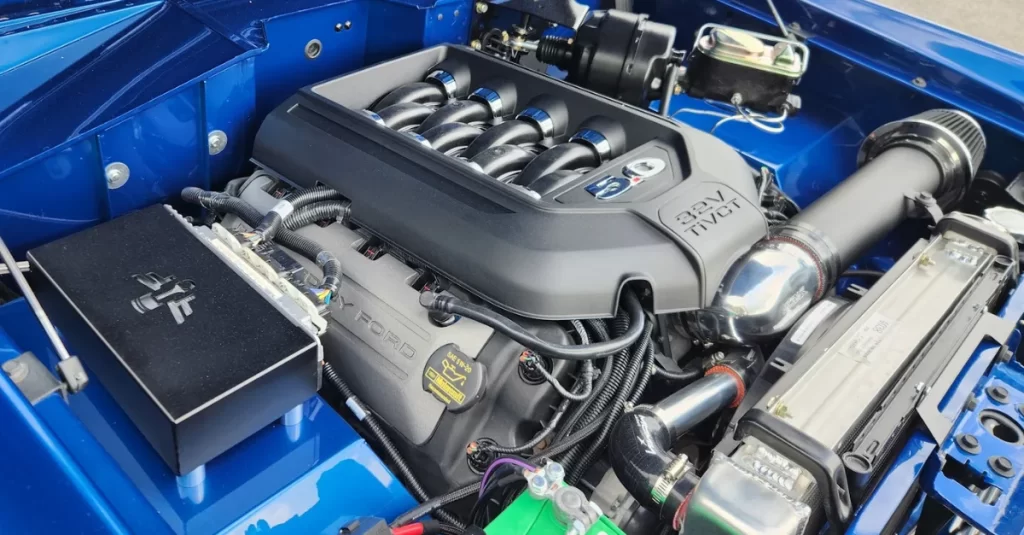
From the outside, a restomod may still look close to the original vehicle. Underneath, however, it may include modern technology and custom components such as:
- An upgraded engine or complete drivetrain swap
- Modern disc brakes
- Power steering
- Air ride or coilover suspension
- Updated cooling and electrical systems
- Air conditioning
- Modern gauges, audio, and electronics
- Custom wheels and tires
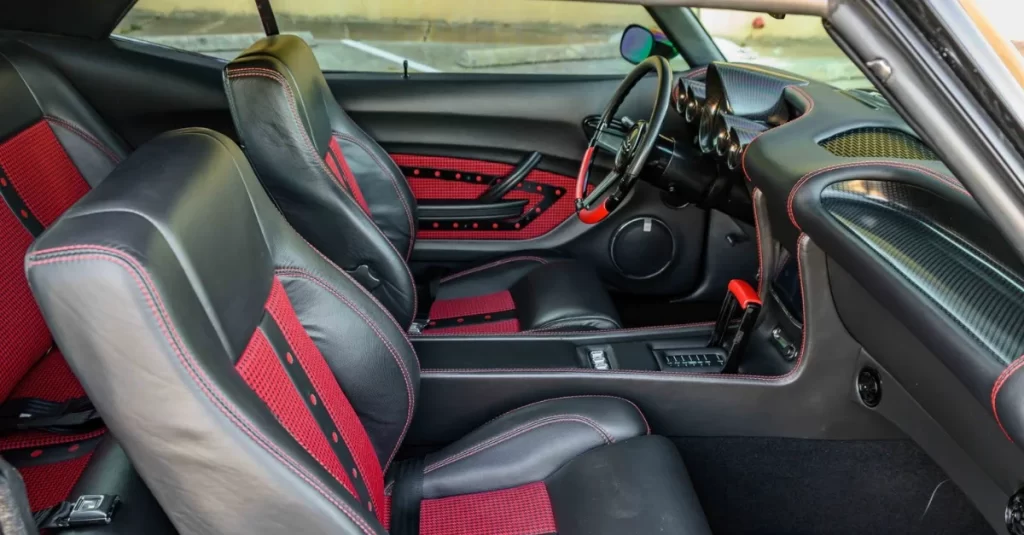
- Improved seating and interior materials
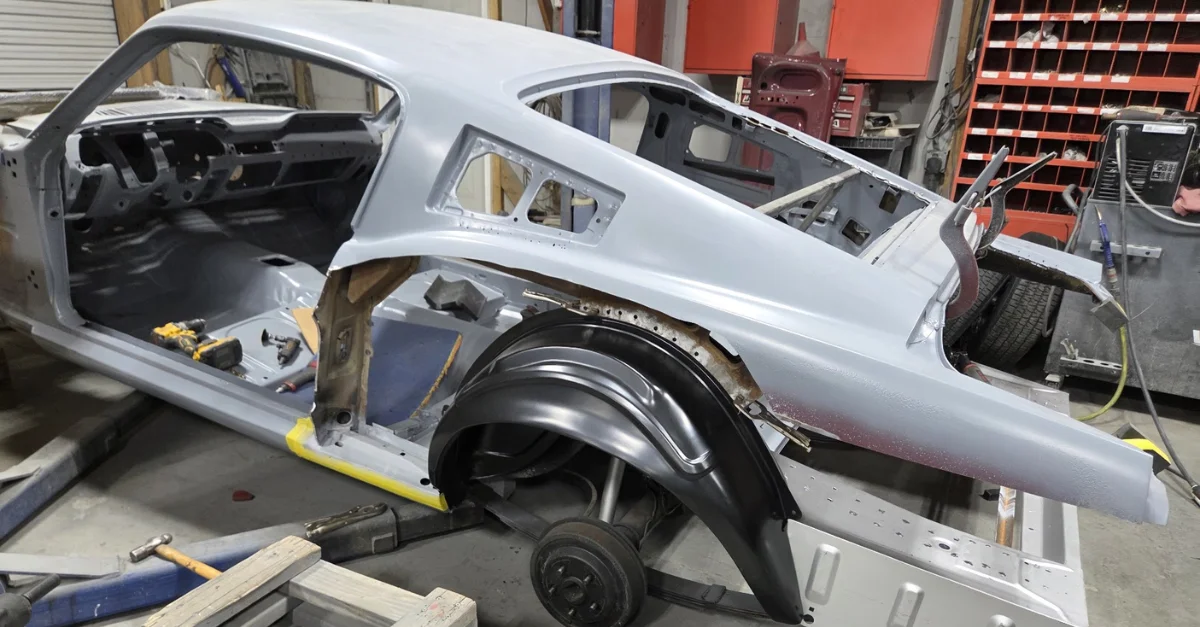
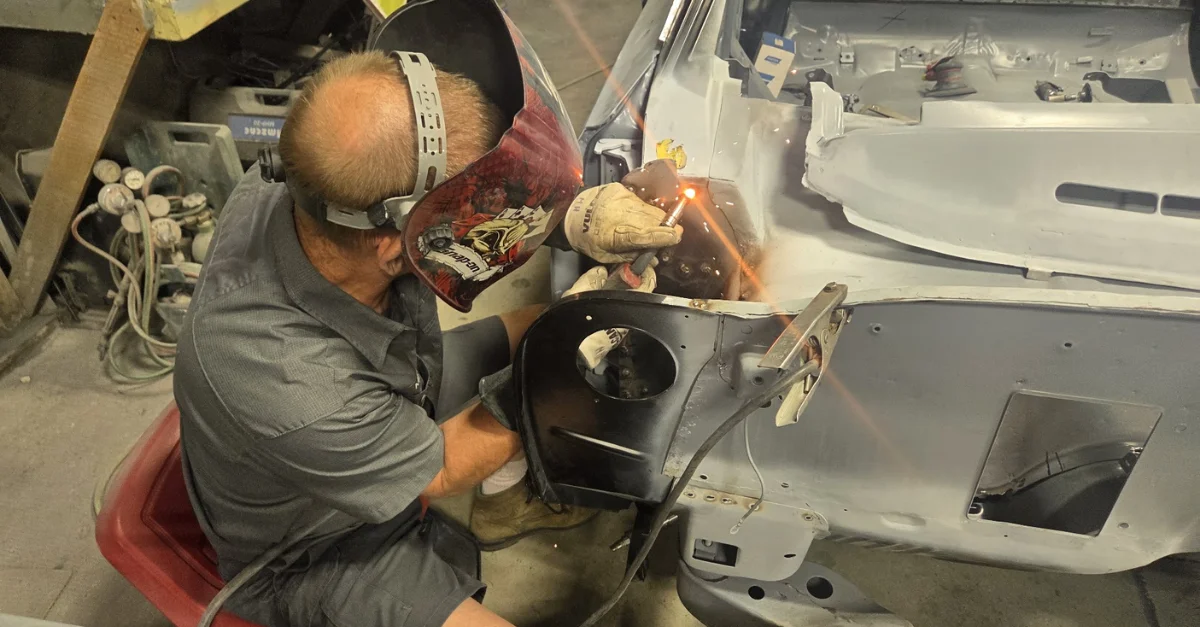
- Structural reinforcement and custom fabrication
Restomods are often built for owners who want classic styling without giving up modern drivability. These upgrades can make the vehicle more comfortable in traffic, more dependable on longer trips, and better suited for regular use.
Restoration vs. Restomod: The Main Differences
The right approach depends on what you want from the finished vehicle.
Originality
A restoration prioritizes factory-correct details. A restomod gives you more freedom to personalize the car and incorporate newer technology.
If preserving the vehicle’s history is your top priority, restoration may be the better direction. If you want to create a classic that reflects your personal style and driving preferences, a restomod offers more flexibility.
Performance
A restored vehicle will generally perform much like it did when it was originally built. For many enthusiasts, that experience is part of the appeal.
A restomod can deliver increased horsepower, better handling, stronger braking, and improved highway performance. The challenge is selecting upgrades that work together rather than treating each modification as a separate decision.
Comfort and Convenience
Classic vehicles were not designed with today’s expectations for climate control, sound systems, steering, braking, and ride quality.
A traditional restoration may retain that original experience. A restomod can add modern conveniences while preserving the appearance that made the vehicle special.
Parts and Fabrication
A factory-style restoration may require hard-to-find original or reproduction parts. Locating the correct components can take time, especially for rare vehicles.
Restomods may rely more heavily on aftermarket parts and custom fabrication. Engine swaps, suspension changes, and modern accessories can require custom mounts, brackets, panels, wiring, or chassis modifications to achieve a proper fit.
Long-Term Value
There is no universal rule stating that a restoration or restomod will always be more valuable. The result depends on the vehicle, its rarity, the quality of the work, the parts used, and what future buyers want.
A rare, numbers-matching car may benefit from preserving its originality. While a more common model may provide greater freedom to modify without sacrificing the features that make it desirable.
Regardless of direction, quality matters. Thoughtful planning, precise fabrication, professional paintwork, and careful documentation can all influence how the finished vehicle is viewed.
Questions to Ask Before Choosing
Before committing to either approach, consider the following questions:
- How do you plan to use the car?
- Is originality important to you?
- Is the vehicle rare or numbers-matching?
- Do you want a period-correct driving experience?
- Would modern brakes, steering, suspension, or air conditioning make you more likely to drive it?
- Are replacement parts readily available?
- What is your realistic budget and timeline?
- Do you plan to keep the vehicle long-term or eventually sell it?
Your answers may point clearly toward one direction. They may also reveal that the best choice is somewhere in between.
Can You Combine Both Approaches?
Absolutely. Not every build needs to fit neatly into one category.
Some owners preserve the original body, trim, paint style, and interior while adding less-visible improvements to the brakes, cooling system, steering, or suspension. Others keep the car period-correct under the hood but introduce modern comfort features inside.
The goal should be to create a cohesive vehicle. Every upgrade should support the way you want the car to look, feel, and perform. Planning those decisions before disassembly begins can prevent incompatible parts, unnecessary fabrication, and changes that have to be redone later.
Build the Classic That Fits Your Vision
There is no single correct way to rebuild a classic car. A faithful restoration can preserve an important piece of automotive history, while a thoughtfully designed restomod can make a classic more capable and enjoyable on today’s roads.
The right choice is the one that fits your vehicle, your priorities, and your vision.
With more than 35 years of hands-on experience, GB Customs handles complete frame-off restorations, custom fabrication, specialized paint, chassis and suspension modifications, parts sourcing, and turn-key project management. Our team can help you evaluate your options and develop a complete plan for your build—all with one point of contact from start to finish.
Ready to discuss your project? Contact GB Customs in Corbin, Kentucky, to get started.